Engineering commercial fusion

A compact approach
to fusion energy

Kinetic Fusion is developing a compact hybrid fusion reactor to unlock the potential of fusion energy; our goal is simple: make fusion practical, scalable, and commercially viable
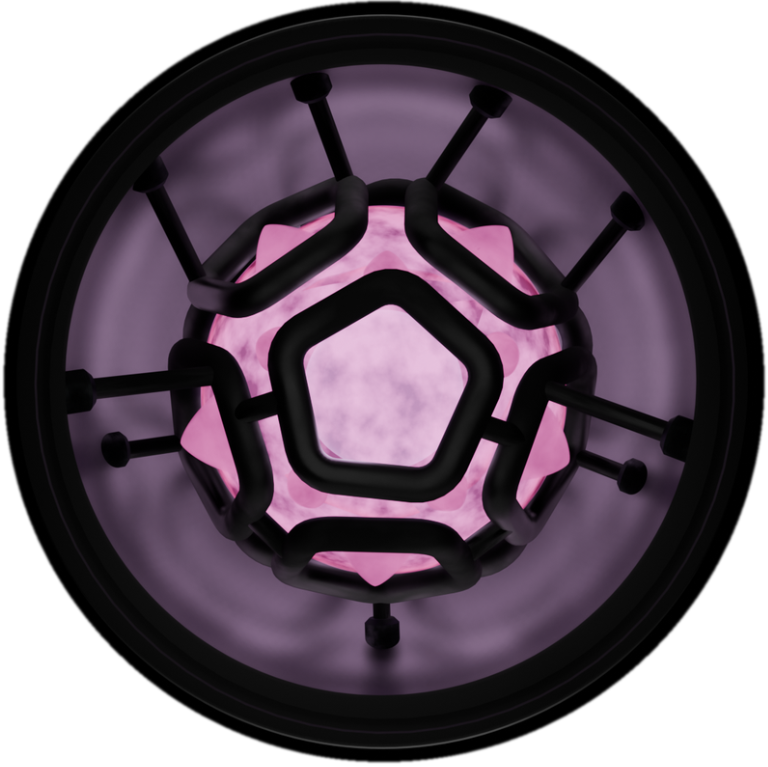
Render of the Kinetic Fusion compact hybrid fusion reactor, a dodecahedral vessel
One platform, two applicationsMedical isotope production first, fusion energy next
~2.5 m reactor diameterVacuum vessel and first wall
Commercial by designDesigned for production, scale and operation
One technology, two applications

A first product for medicine
A foundation for fusion power

The technology is being developed first for a commercial medical application, creating a pathway to revenue and technical validation before being adapted for our fusion reactor

First planned application

Medicine

A system for medical isotope production

A standalone system for medical isotope production, providing a first commercial application before full fusion power reactor development

Future reactor application

Energy

A system for fusion power

The same underlying system design will be adapted for use in a compact fusion power reactor, supporting the long-term goal of electricity generation

The physics

Small particles
A powerful reaction

Fusion combines two light atomic nuclei, releasing energy that a future power plant could turn into electricity

DeuteriumHydrogen fuel
+
TritiumHydrogen fuel
→
Helium nucleusFusion product
+
NeutronCarries energy

D–T

Two forms of hydrogen

Deuterium and tritium are the fuel for the proposed reactor, and their nuclei fuse to release energy

3.5 MeV

A helium nucleus

The reaction produces a helium nucleus with an energy of 3.5 MeV

14.1 MeV

A high energy neutron

The neutron carries energy that a future power plant would capture and convert into electricity

Inside the hybrid reactor

Three technologies,
One compact reactor

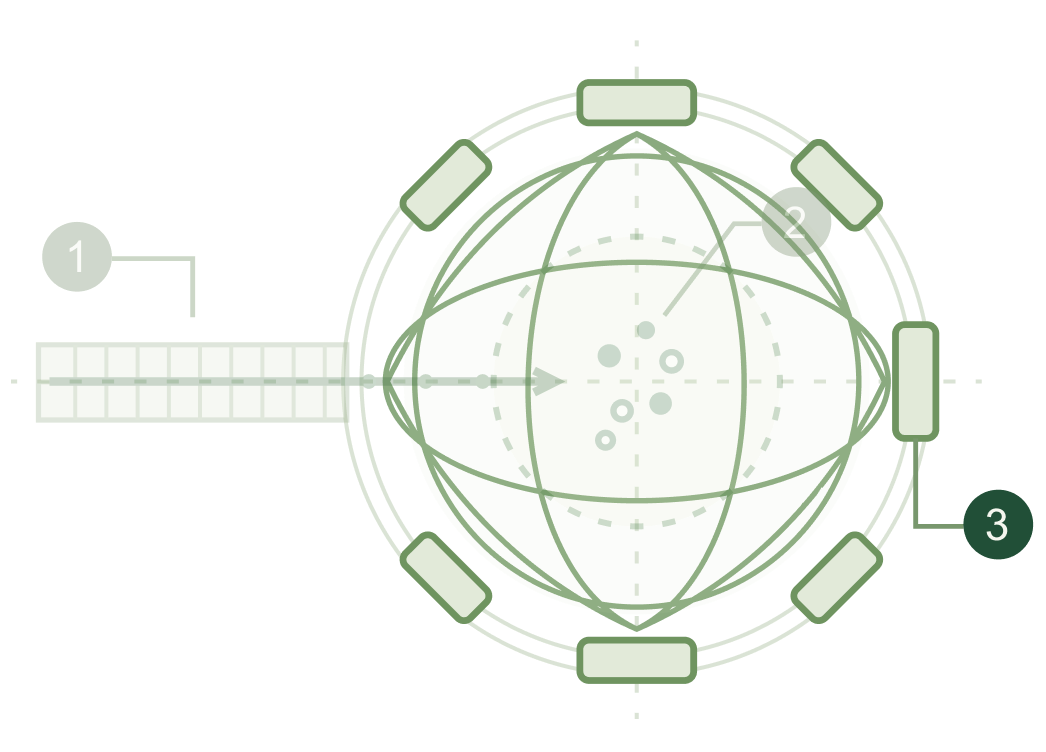
Inside the reactor, the fusion fuel is heated into a plasma: a gas of charged particles. Our Magnetic & Electrostatic Confinement system confines this plasma, creating the conditions required for sustained nuclear fusion

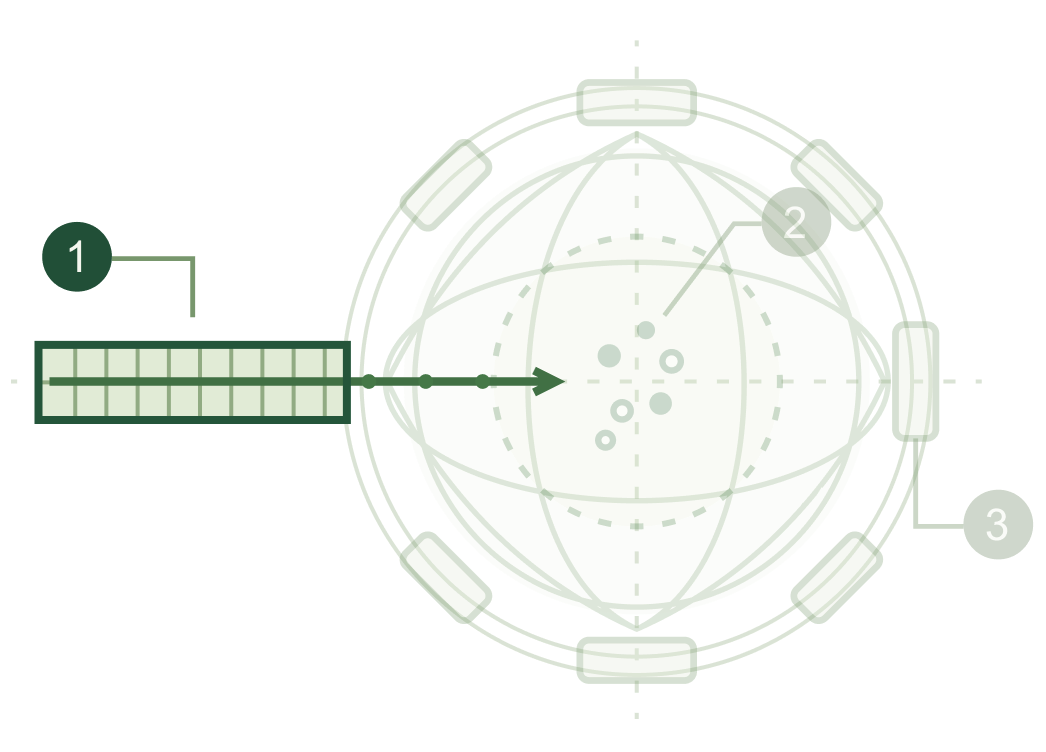
Reactor diagram with the fuel accelerator highlighted

Deliver the fuel

Our standalone medical isotope production system is adapted for use in the fusion reactor

Fuel supply

Deliver and replenish nuclear fuel

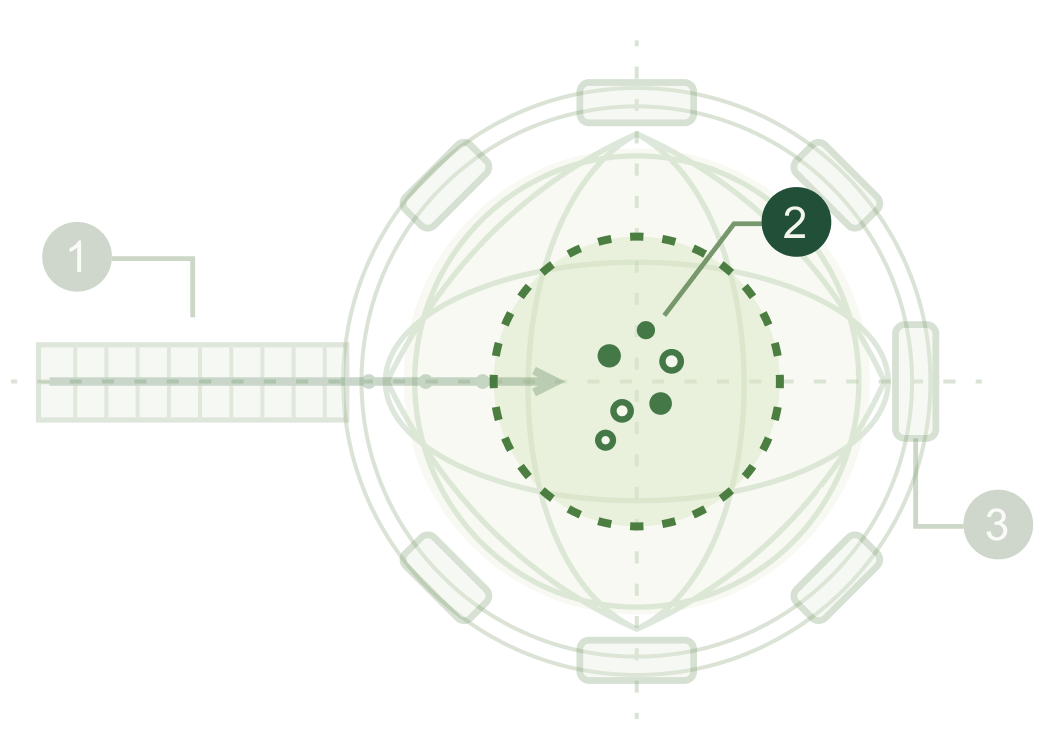
Electrostatic confinement

Help form an electron cloud that creates the electric potential well

Reactor diagram with the electron cloud and potential well highlighted

Draw fuel ions inward
Sustain confinement

The electron cloud creates an electric potential well that draws positively charged fuel ions towards the centre

Confinement

Keep the fuel ions confined away from the reactor walls, helping to maintain a dense plasma

Fusion conditions

Create the conditions required for nuclear fusion

Reactor diagram with the superconducting magnets highlighted

Help hold the electron
cloud in place

High-temperature superconducting magnets generate magnetic fields that help confine the plasma

Electron confinement

Magnetic fields primarily confine the electrons, whose smaller gyroradius enables tighter confinement

Combined confinement

The combination of electrostatic and magnetic confinement helps create a dense, stable plasma core

1/3

Designed to be compact

A smaller core
A more practical path to deployment

The design aims to concentrate fusion power in a compact core, with the commercial objective of lower capital requirements and a shorter route to deployment

~60 kV

Potential Well

Electrostatic well depth, for plasma confinement, supporting a high fusion probability and reaction rate

~1.7 m

Plasma core diameter

A compact core enabled by the unique hybrid reactor approach

~2.5 m

Vessel and first wall diameter

The diameter of the reactor chamber, excluding surrounding plant and supporting systems

The development pathway

Build the first product
Advance towards power

Four planned stages take the underlying technology from its first commercial application to a compact fusion power system; each stage addresses a distinct technical and commercial milestone

01 / MEDICINE

Commercialise the core
technology

Develop and commercialise the standalone system for medical isotope production

02 / FUSION INTEGRATION

Adapt the system
for fusion

Adapt the system for nuclear fuel delivery, electrostatic confinement and magnetic confinement

03 / DEMONSTRATION

Demonstrate the
compact reactor

Demonstrate the integrated reactor concept and evaluate its performance

04 / FUSION POWER

Scale towards
commercial power

Develop a system that produces more energy than is required to sustain the reaction, enabling practical power generation

Let’s talk

Whether you are interested in our technology, exploring collaboration opportunities, or want to learn more about our approach to commercial fusion, we welcome conversations with partners, researchers, and industry professionals

Get in touch to discuss how we are working to advance our compact hybrid fusion technology toward commercial deployment